
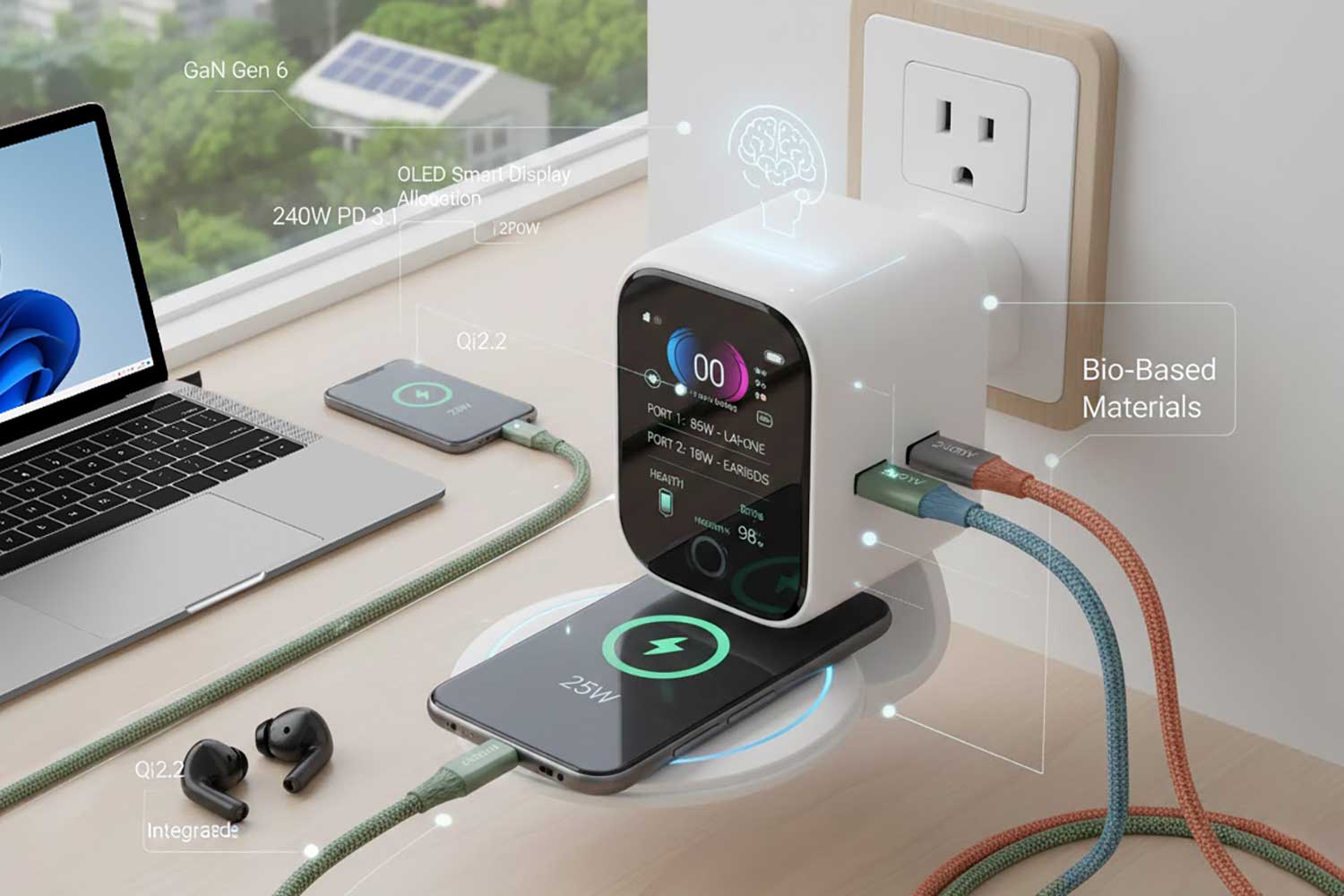
The consumer electronics wall charger market has moved beyond just “providing power.” It is now defined by extreme power density, intelligent energy management, and high-fidelity user feedback.
Driven by the mass adoption of Gallium Nitride (GaN) and the standardization of USB-C, YERVIM shall keep developing wall chargers based on the following principles.
A. The “GaN-Everything” Standard: Nowadays, Gallium Nitride (GaN) has completely replaced silicon in the mid-to-high-end market.
- Extreme Power Density: YERVIM shall achieve the “Holy Grail” of 100W output in chargers no larger than a standard smartphone power brick. The 45W–65W segment has become the “standard” pocket-sized travel unit.
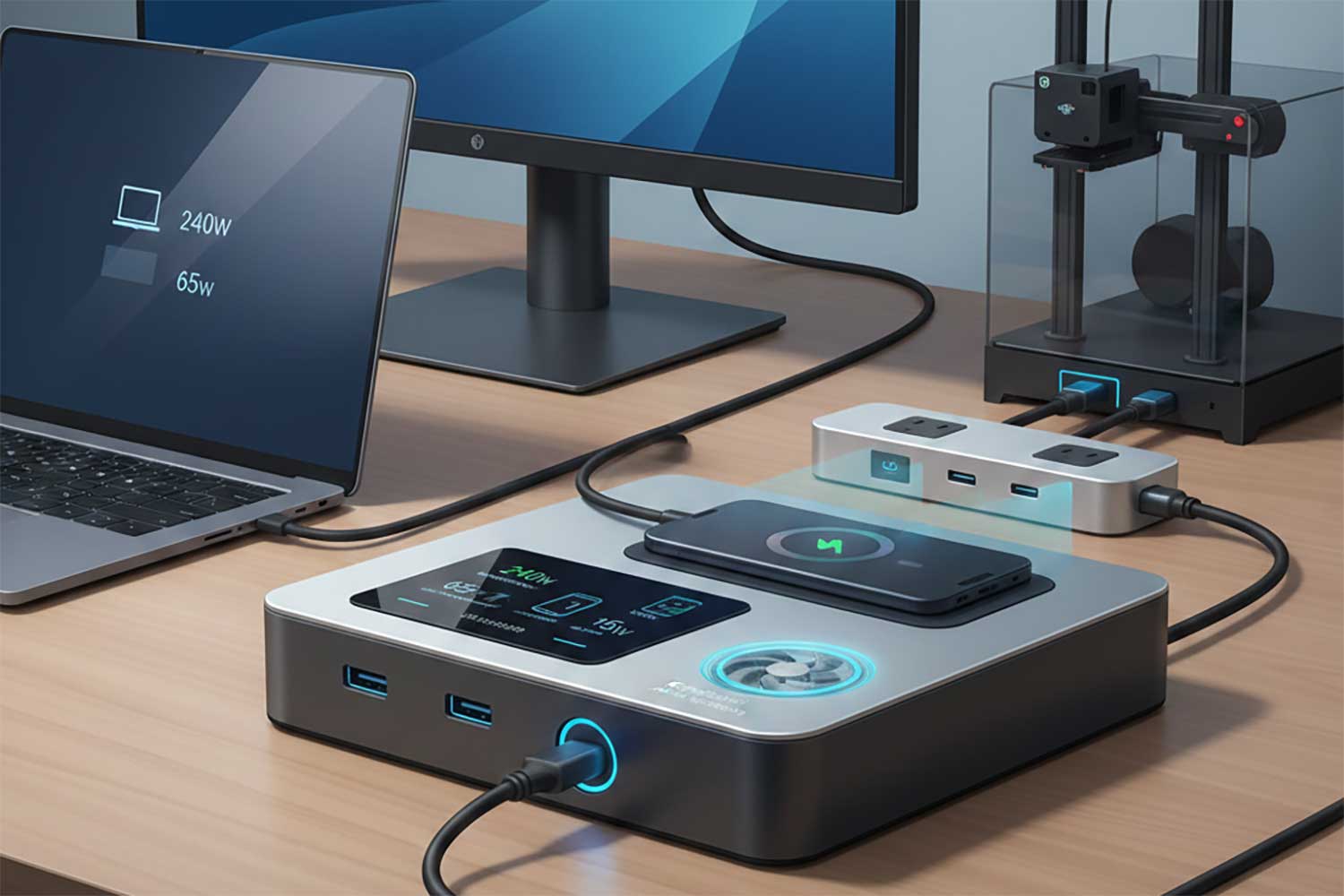
- Thermally Efficient Designs: YERVIM shall utilize “Active Cooling” systems—miniature, silent fans or liquid-phase cooling—to maintain peak wattage for hours without thermal throttling, particularly in 140W+ chargers.
B. Smart Displays and Real-Time Telemetry: Chargers are no longer “black boxes.” YERVIM shall try to make an integration of OLED/LCD Status Displays directly on the wall plug.
- Visibility: Users shall be able to see real-time wattage per port, battery health percentages, and charging protocols (e.g., PD 3.1, PPS) in use.
- Digital Health Monitoring: These displays can alert users if a cable is faulty or if the device is drawing unusual amounts of power, preventing potential fire hazards.
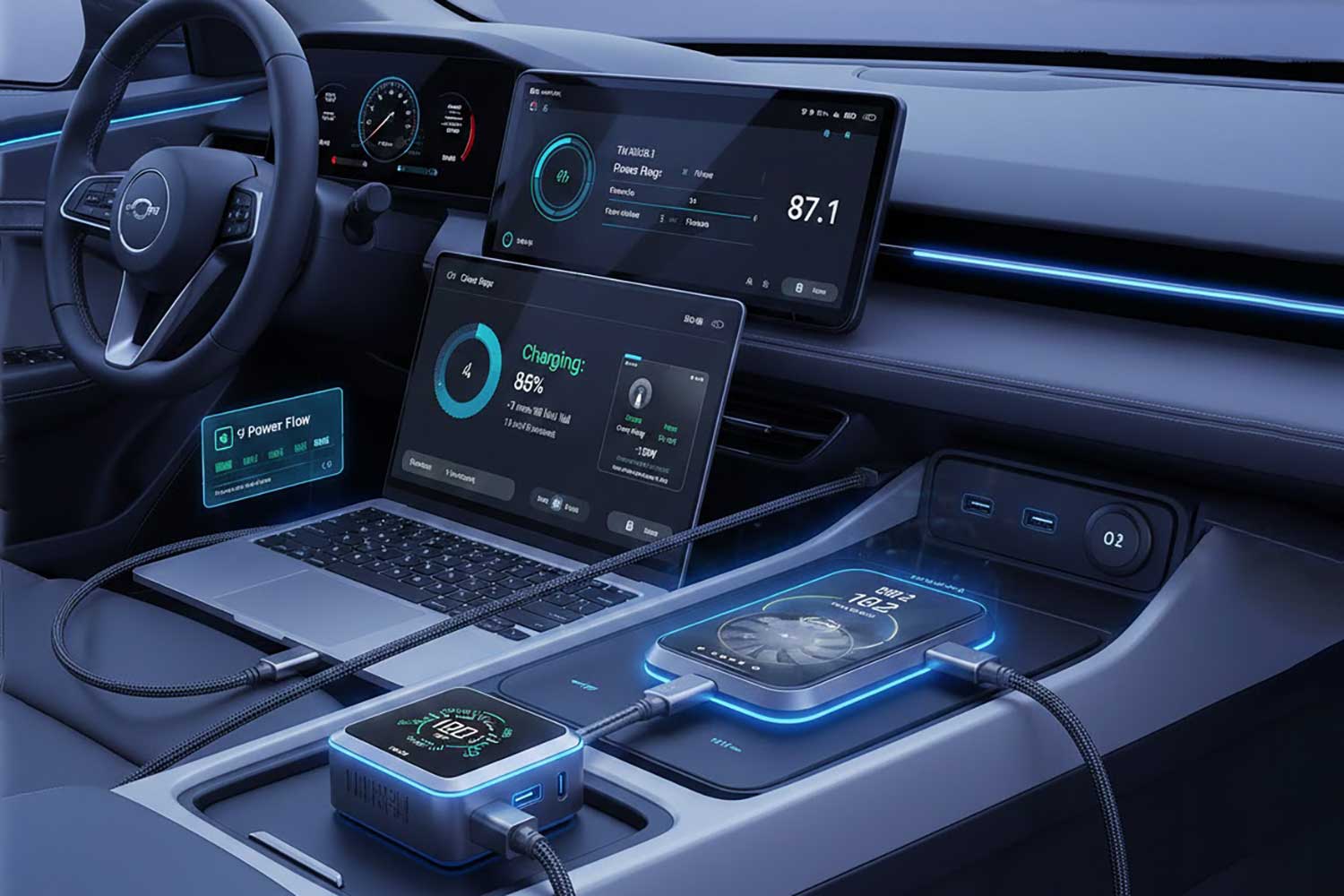
C. Dynamic Power Allocation (AI Charging): The era of fixed-wattage ports is over. YERVIM shall try to make an application of AI-driven power management on wall chargers:
- Intelligent Splitting: If you have a 100W charger and plug in a laptop (65W) and a phone (20W), the charger dynamically allocates the remaining 15W to a third device (like earbuds) rather than cutting the laptop’s power in half.
- Protocol Universality: Protocols like USB Power Delivery (PD) 3.1 and Programmable Power Supply (PPS) have unified the market, allowing a single wall charger to optimally fast-charge everything from an iPhone 17 to a high-end gaming laptop or a Nintendo Switch 2.
D. Integration of Qi2.2 Magnetic Wireless: Wall chargers shall become “hybrid” stations.
- Fold-out Charging: Nowadays many wall units already featured a fold-out magnetic pad supporting Qi2.2, allowing users to snap their phone onto the wall plug itself for a 25W wireless charge while simultaneously using the USB-C ports for other gear.
- Travel Minimalism: This “all-in-one” approach shall be designed to eliminate the need for separate wireless pads and cables during travel.
E. Sustainability and Circular Design: As environmental regulations tighten, the “Green Charger” already became a selling point.
- Bio-Based Shells: Use of PCR (Post-Consumer Recycled) plastics and bio-polymers derived from corn or sugarcane is now common.
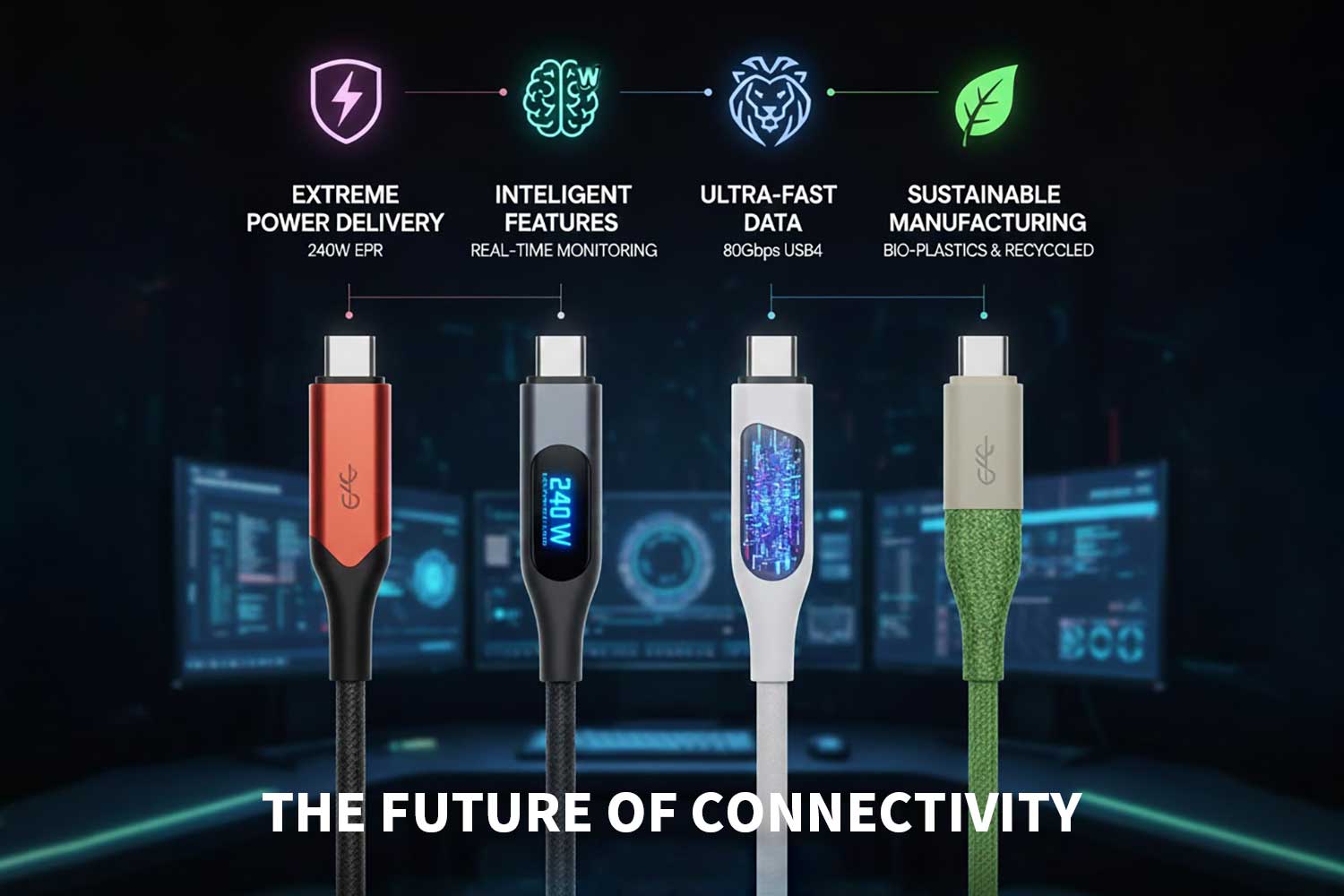
- Modular Cables: To combat the “broken connector” e-waste problem, more chargers are shipping with high-durability, user-replaceable braided cables (supporting up to 240W) instead of fixed cords.
Comparison Table:
| Feature | Nowadays | Future |
|---|---|---|
| Primary Material | Silicon / Early GaN | Advanced GaN (Gen 5/6) |
| Max Common Output | 65W | 140W – 240W |
| User Interface | Single LED light | LCD/OLED Digital Displays |
| Wireless Support | Separate accessories | Integrated Qi2.2 Pads |
| Cable Support | USB-C (100W max) | USB-C PD 3.1 (240W) |


Leave A Comment
You must be logged in to post a comment.