
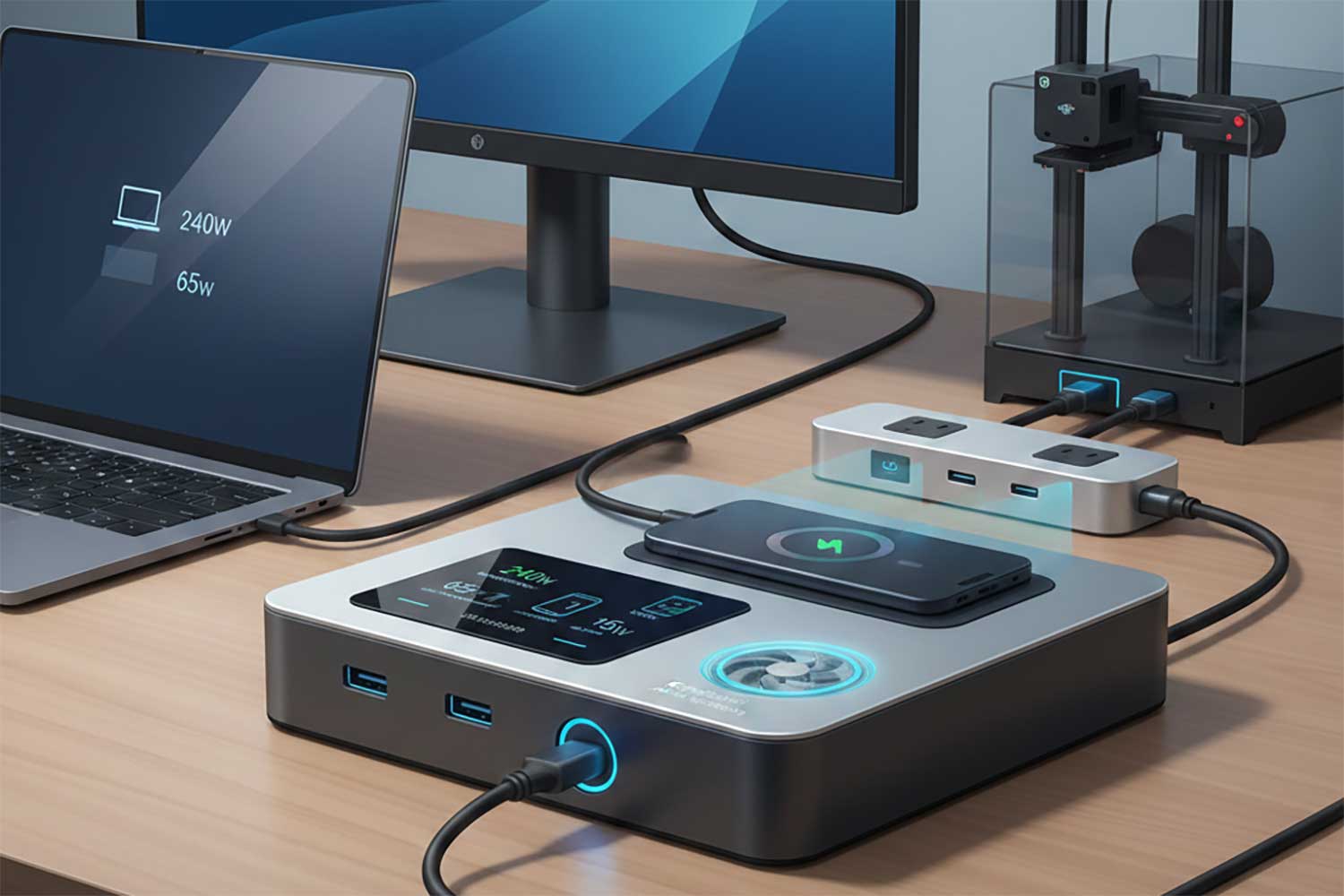
The desktop charger market has moved beyond simple “power bricks” to become sophisticated power hubs. The prevailing trend is the convergence of high-wattage power, intelligent distribution, and aesthetic integration into the workspace. YERVIM’s key development directions for desktop chargers are as follows:
1. The Era of Ultra-High Power (USB-C PD 3.1): The industry has largely moved past the 100W ceiling.
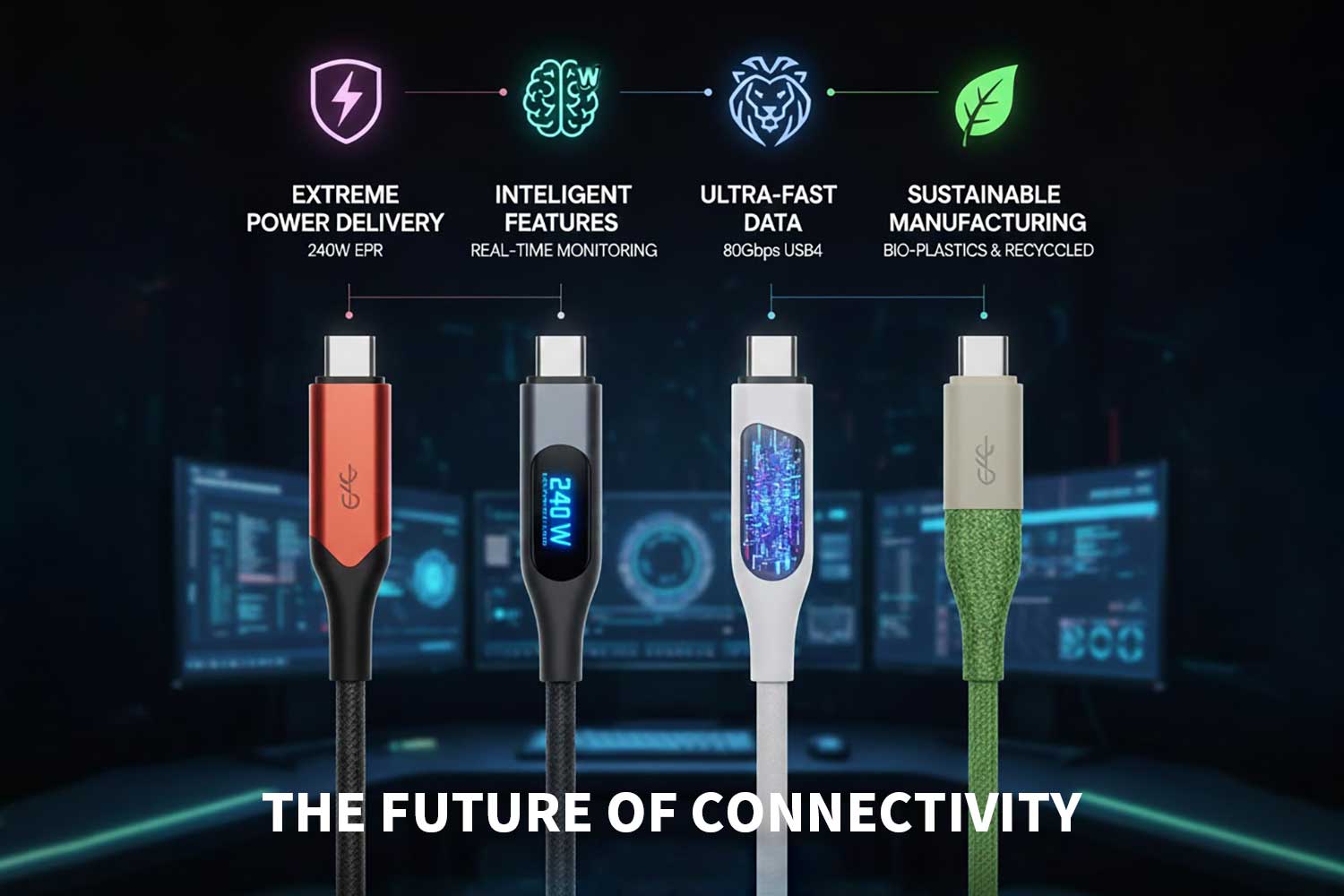
- 240W Standard: Following the USB Power Delivery 3.1 spec, premium desktop chargers now commonly offer 140W to 240W on a single port. This allows a single desktop station to power high-performance gaming laptops or mobile workstations that previously required proprietary DC barrels.
- Multi-Port High Wattage: Modern units shall be able to output high wattage across multiple USB-C ports simultaneously, effectively replacing 3–4 separate laptop chargers.
2. GaN 5 and Beyond : Shrinking the Footprint
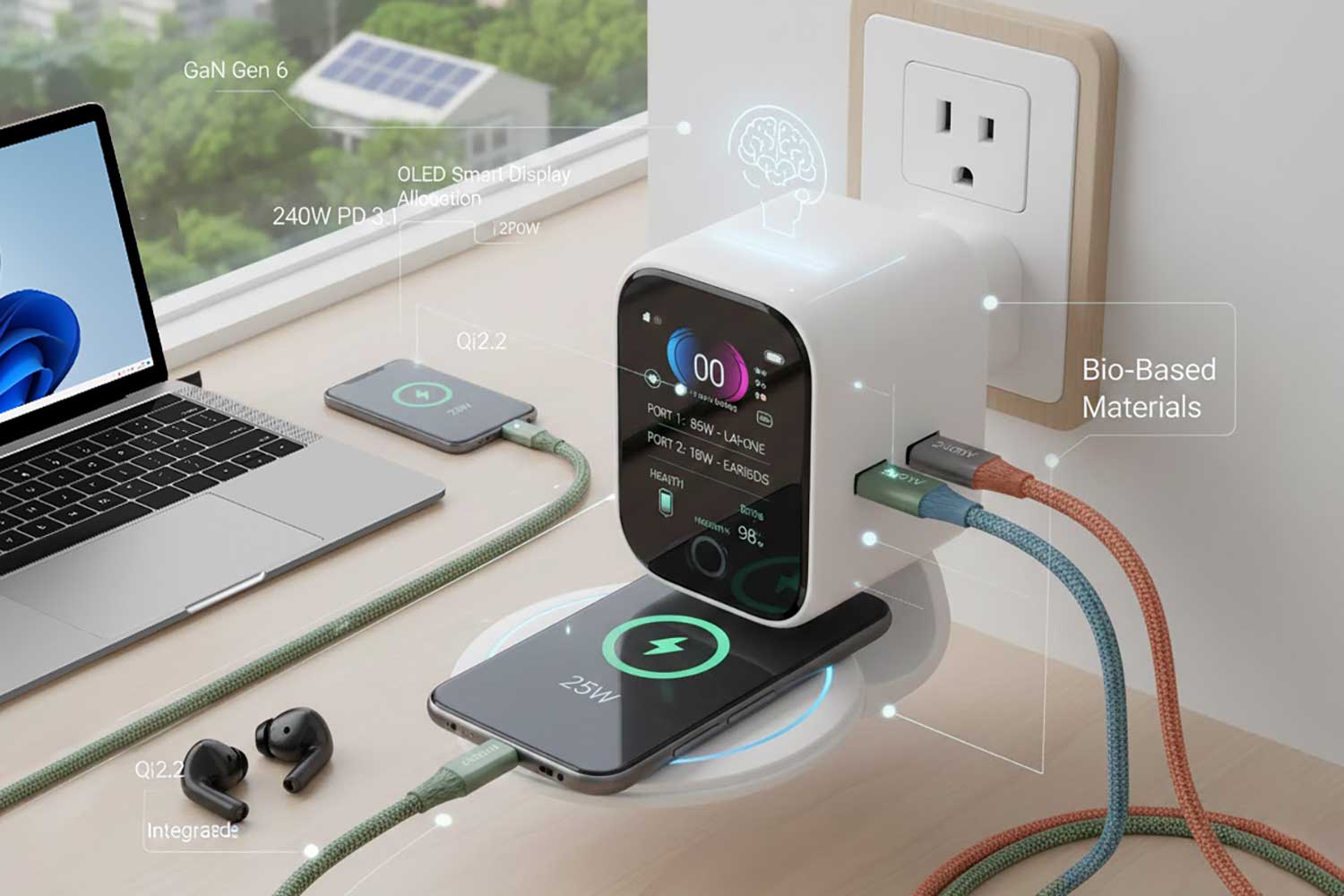
Gallium Nitride (GaN) technology has reached its 5th generation, allowing for even higher “power density.”
- Thermal Efficiency: New chargers shall not be just smaller; they run significantly cooler. Advanced thermal management means these hubs can sit on your desk for hours at full load without becoming a fire hazard.
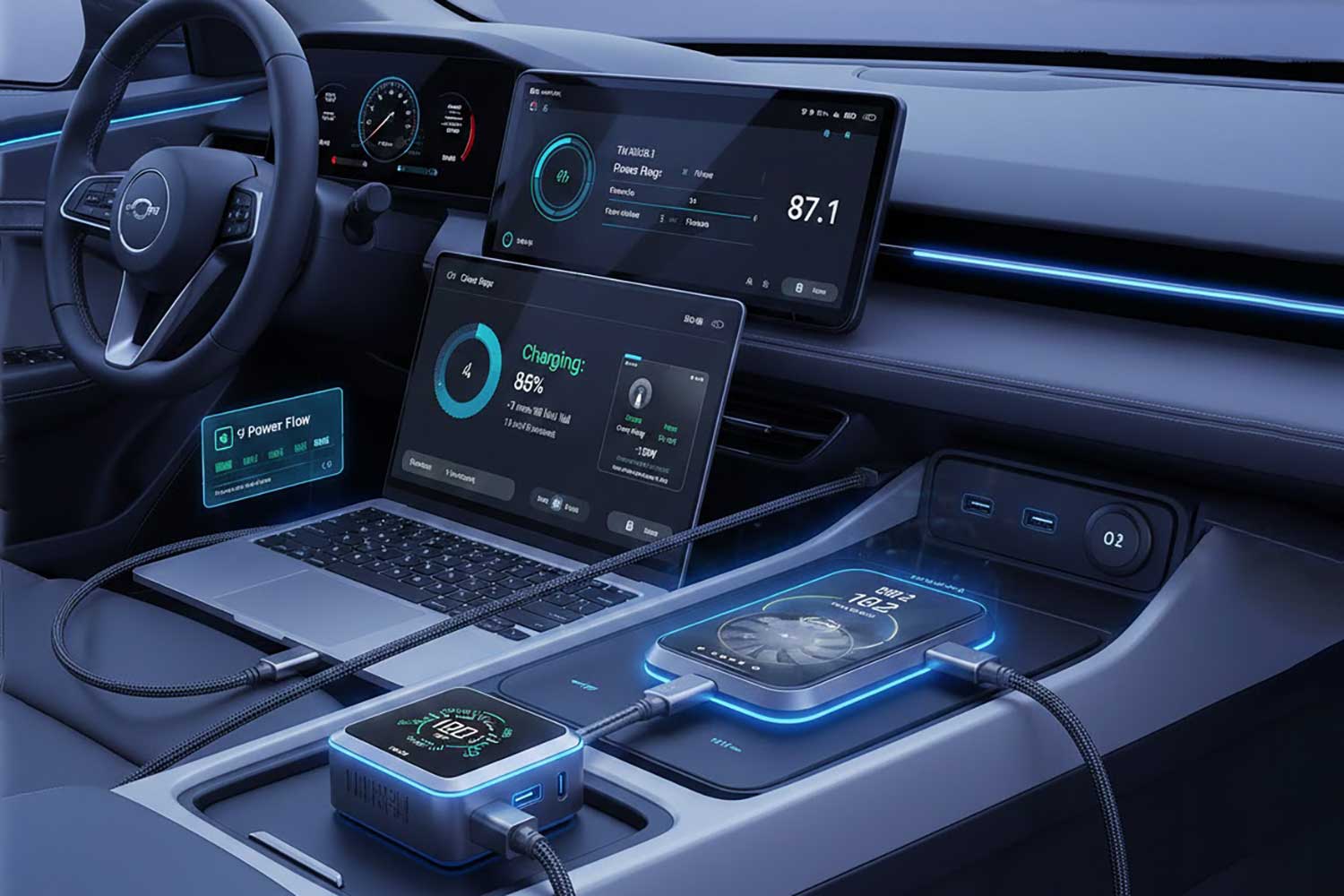
- Integrated Design: Because components are smaller, designers are embedding chargers into other desk accessories, such as monitor stands, desk mats, and even lamp bases.
3. Qi2 & MagSafe-Style Wireless Integration: Wireless charging shall be no longer an “extra” but a central feature of the desktop hub.
- Qi2 Standard: Most desktop chargers in the market include a Qi2-certified magnetic puck. This provides 15W–25W fast wireless charging for iPhones and newer Android devices, ensuring perfect alignment every time.
- Active Cooling (CryoBoost): To maintain fast wireless speeds without overheating the phone, top-tier chargers now feature small, silent fans (like ESR’s CryoBoost) that blow cool air on the back of the device during the charging cycle.
4. Smart Monitoring & Visual Feedback: Desktop chargers shall gain “intelligence” to help users manage their power.
- Real-time Displays: It is now standard for mid-to-high-end chargers to feature an integrated LCD or LED screen showing real-time wattage for each individual port.
- App Control: Some hubs connect via Bluetooth/Wi-Fi to a desktop app, allowing you to prioritize power to specific ports (e.g., “Give my laptop 100W and let the headphones trickle charge”).
5. Cable Management & Aesthetics: The “war on cable clutter” is a major design driver.
- Retractable Cables: YERVIM shall launch hubs with built-in retractable USB-C cables (up to 3 feet). This eliminates the need for loose cables sprawling across the desk.
- Hybrid AC/DC Hubs: YERVIM shall combine traditional AC outlets (for monitors/printers) with high-speed USB-C ports in a single, sleek “desktop strip” to consolidate all power needs into one box.
Comparison Table:
| Feature | Current Standard | Future Directions |
|---|---|---|
| Max Port Output | 100W | 140~240W |
| Semiconductor | GaN 2 / GaN 3 | GaN 5 / GaN 6 |
| Wireless Tech | Qi (5~10W) | Qi2 Magnetic(15~25W) |
| Design Priority | Portability | Desktop Aesthetics & Cooling |
| Feedback | Simple LED light | Real-time Wattage Displays |


Leave A Comment
You must be logged in to post a comment.