
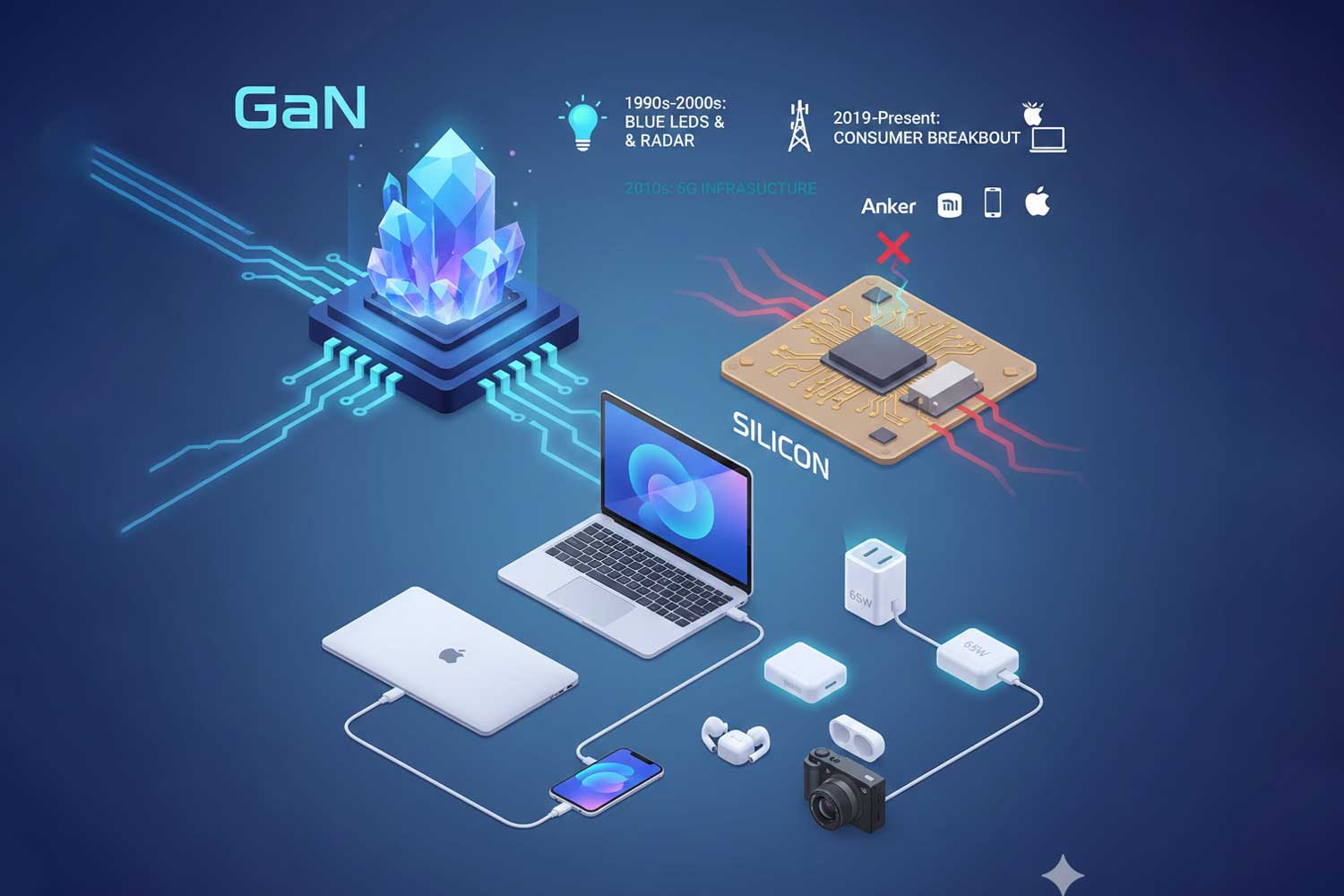
In recent years, Gallium Nitride (GaN) has rapidly replaced silicon as the material of choice for power electronics in gadgets like phone chargers, laptops, and even audio equipment. While silicon has been the industry standard since the 1950s, it has hit a physical “ceiling” where it can no longer get significantly smaller or faster without overheating. Here is how GaN broke through and became the new standard.
1. The Physics – Why GaN is Superior: The primary reason for GaN’s rise is its property as a Wide Bandgap (WBG) semiconductor.
- Efficiency: Electrons can move through GaN up to 30% faster than silicon. This means GaN can handle higher electric fields and switch power on and off much more rapidly.
- Heat Reduction: Because it is more efficient, less energy is “lost” as heat. In traditional chargers, that heat is why the brick gets hot to the touch; GaN chargers stay significantly cooler.
- Voltage Handling: GaN can withstand higher voltages in a smaller physical space. A GaN crystal can handle roughly 10 times the electrical breakdown field of silicon.
2. The “Shrink” Effect (Miniaturization): The most visible benefit to consumers is the size. GaN allows for a massive reduction in the size of internal components:
- Smaller Transformers: Because GaN can switch at much higher frequencies (often 10 to 100 times faster than silicon), the inductors and capacitors inside a charger can be physically smaller while still processing the same amount of power.
- Heatsink Removal: Since GaN generates less heat, manufacturers can remove or downsize the bulky metal heatsinks and “thermal goop” previously required to keep chargers from melting.
- Result: A 65W GaN charger today is often the same size as an old 5W iPhone “sugar cube” charger.
3. The Path to Popularity: GaN didn’t become popular overnight. Its journey into your pocket followed a specific timeline:
- Phase 1: Specialized Use (1990s–2000s): GaN was first famous for making Blue LEDs possible (leading to Blu-ray and modern LED bulbs). It was also used in military radar and satellite communications due to its durability.
- Phase 2: The Infrastructure Push (2010s): The rise of 5G required base stations that could handle high frequencies and high power without massive cooling systems. GaN was the perfect fit.
- Phase 3: Consumer Breakout (2019–Present): Companies like Anker, RAVPower, and Xiaomi began releasing GaN chargers. In 2021, Apple signaled the “official” arrival of the tech by including a 140W GaN charger with the 16-inch MacBook Pro.
4. Market Comparison: GaN vs. Silicon
| Feature | Silicon(MOSFET) | Gallium Nitride(GaN) |
|---|---|---|
| Efficiency | Lower(~85-90%) | Higher(95%+) |
| Switching Speed | Slower | Extremely Fast |
| Heat Generation | High | Low |
| Size | Bulky | Ultra-Compact |
| Cost | Very Cheap | Moderate(Price dropping) |
Current Trends:
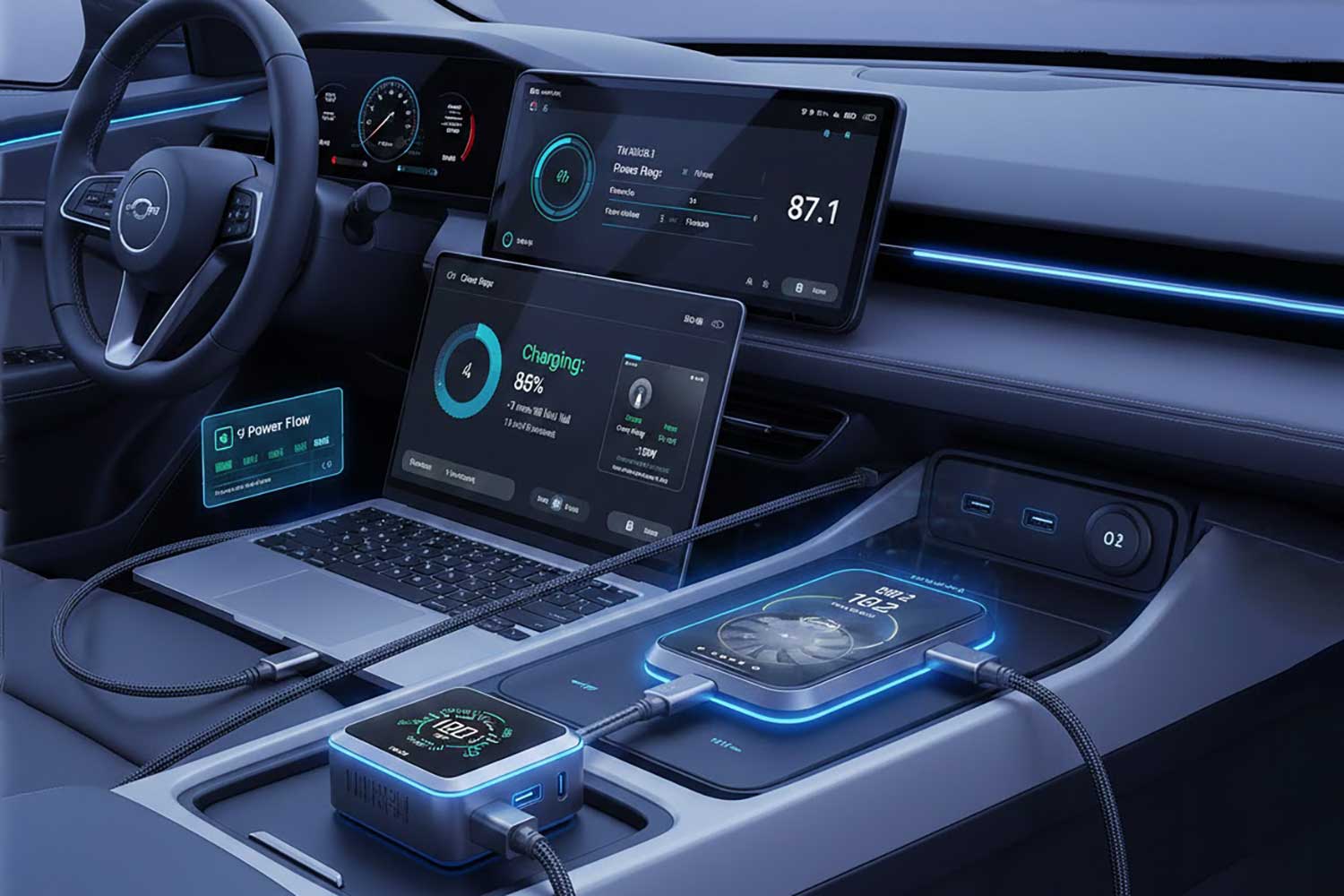
Nowadays, the market has shifted toward Integrated GaN ICs, where the power switch and the controller are on a single chip. This has driven costs down even further, making GaN the default for almost any charger above 30W. We are also seeing GaN move into Electric Vehicle (EV) onboard chargers and High-fidelity audio amplifiers, where its speed results in clearer, more accurate sound.

Leave A Comment
You must be logged in to post a comment.