
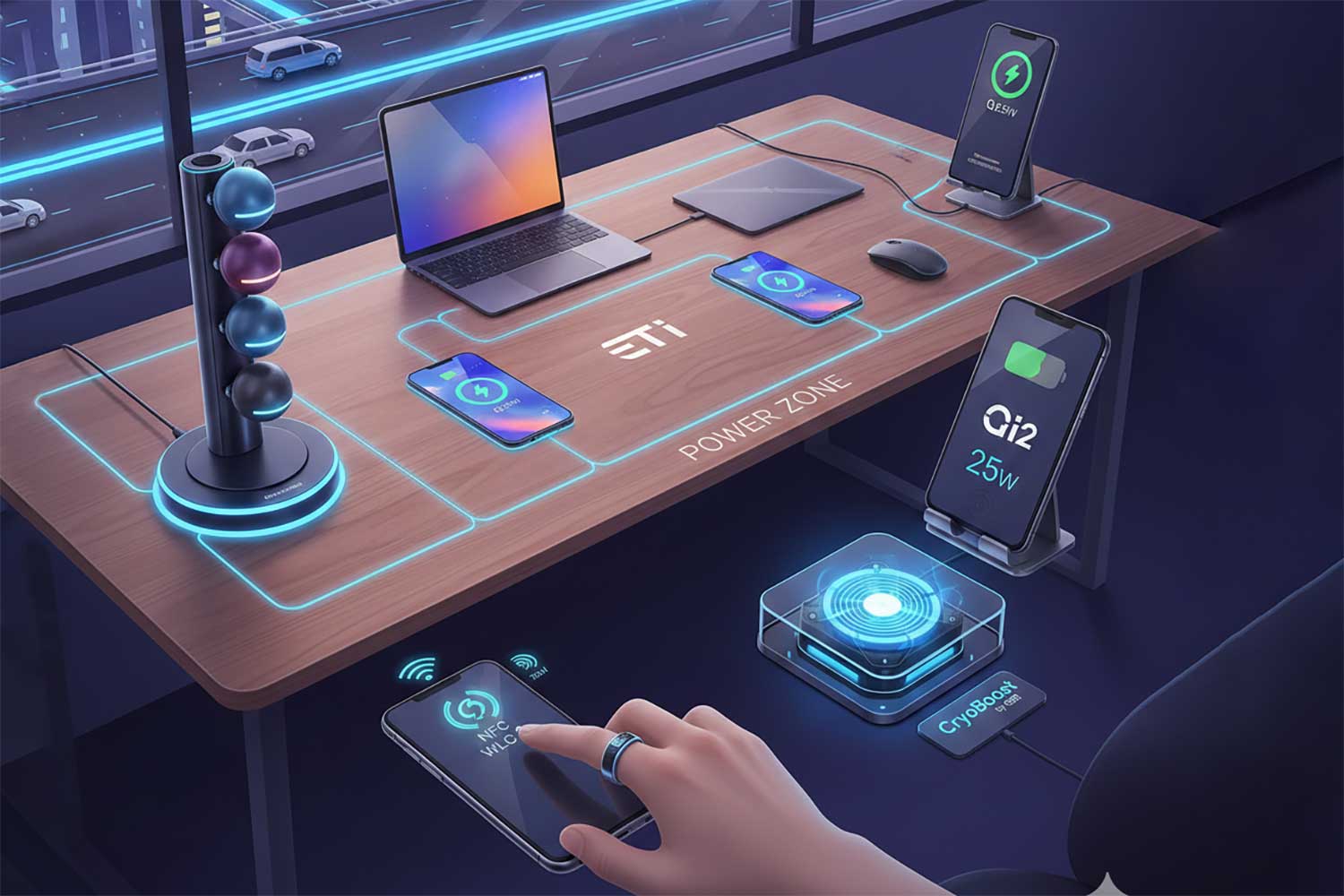
Nowadays, the wireless charging landscape for consumer electronics has moved past the era of “fussy alignment” and slow speeds. Driven by the universal adoption of Qi2, the emergence of over-the-air zones, and the rise of NFC charging for micro-wearables, wireless power is becoming an invisible part of the environment.
Here are the dominant trends in the consumer electronics sector:
1. The Qi2 “Magnetic Standard” Dominance: The Qi2 standard is now the baseline for almost all new smartphones, including the Samsung Galaxy S26 and Google Pixel 10 series.
- 25W Charging Speeds: In 2026, the new Qi2 25W update allows smartphones to charge to 50% in roughly 30 minutes, finally rivaling standard wired charging.
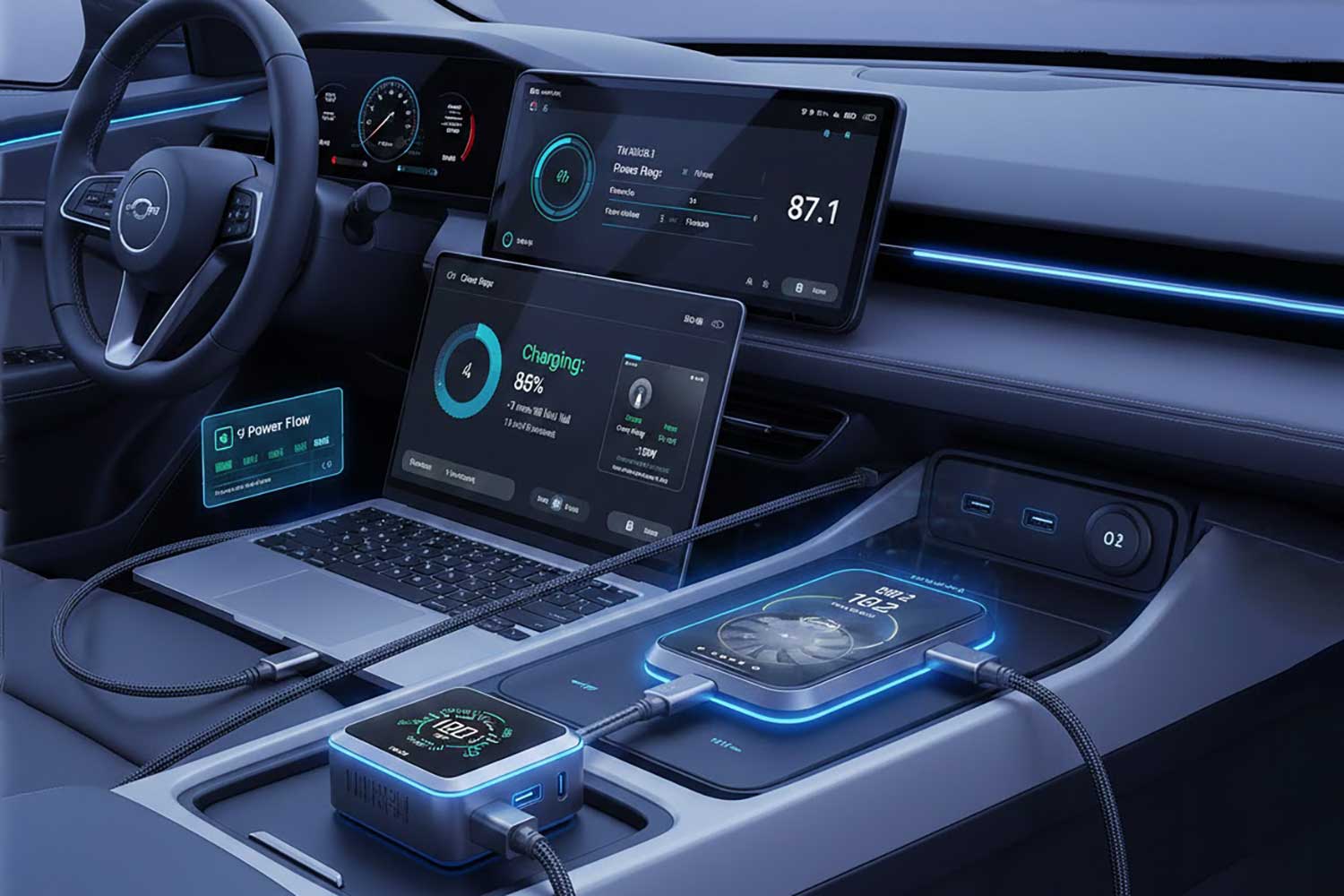
- Thermal Management: To handle these higher speeds, active cooling shall be integrated directly into charging pads to prevent battery degradation from heat.
- Unified Ecosystem: Magnetic rings are no longer exclusive to iPhones. This has created a massive market for interchangeable magnetic accessories (power banks, wallets, and car mounts) that work across Android and iOS.
2. “Wireless Power Zones” (Position-Free Charging): At CES 2026, the shift from “charging pads” to “charging spaces” became a reality.
- Magnetic Resonance (6.78 MHz): “Power Zones” are being deployed to charge multiple devices at once (laptops at 50W+, phones, and mice) as long as they are within a specific area on a desk.
- True Freedom of Movement: Unlike inductive pads, these resonance-based systems do not require the device to be stationary or perfectly aligned; your mouse stays charged while you move it.
3. NFC Wireless Charging 2.0 for Micro-Wearables: For devices too small to fit a standard Qi coil, NFC WLC 2.0 has become the primary power solution.
- Smart Rings & Styluses: Devices like smart rings and digital pens now use their existing NFC antennas to draw up to 3W of power.
- Smartphone-as-Charger: Your phone can now act as a wireless charging pad for your smart ring or earbuds case via NFC, making it a “universal power hub” for your personal ecosystem.
4. Sustainable & Portless Designs: Wireless charging is the primary driver for the “portless” device movement.
- Waterproofing & Durability: By removing the USB-C port, manufacturers are achieving higher IP ratings (water/dust resistance).
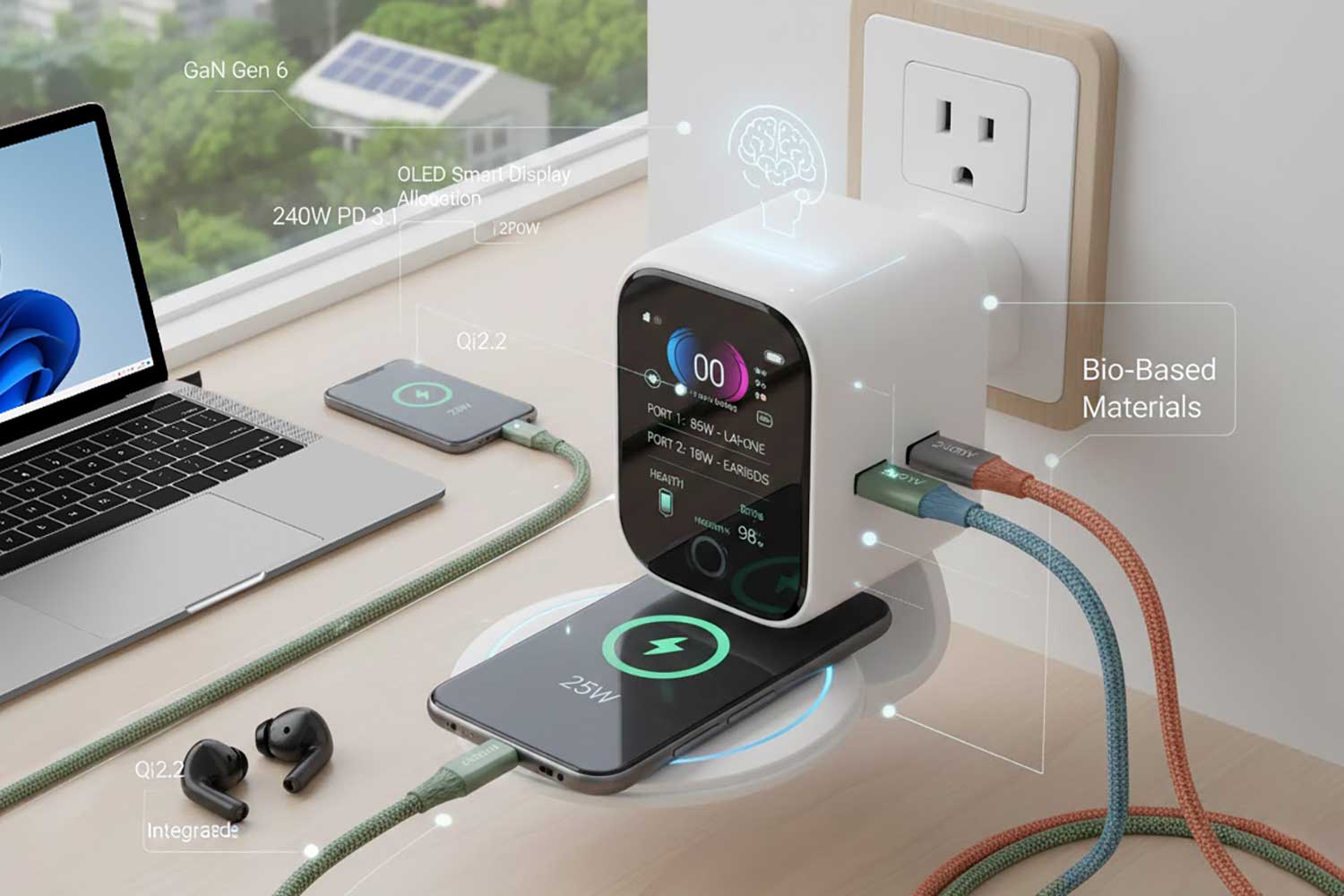
- Battery Longevity: Advanced AI-driven charging protocols now communicate between the charger and the device to stop charging at 80% or slow down during overnight cycles, significantly extending the chemical life of batteries.
Comparative Evolution of Wireless Tech(2026)
| Feature | Inductive (Qi2) | Resonant(ETI/AirFuel) | NFC Charging |
|---|---|---|---|
| Typical Use | Smartphones, Laptops | Desktop Setups | Smart Rings, Styluses |
| Max Power | Up to 25~50W | 50~100W | 1~3W |
| User Experience | Snap-on(Magnetic) | Ambient/Spatial | Tap-to-charge |
| Key Advantage | Efficient & Fast | Multi-device, no wires | Ultra-compact design |
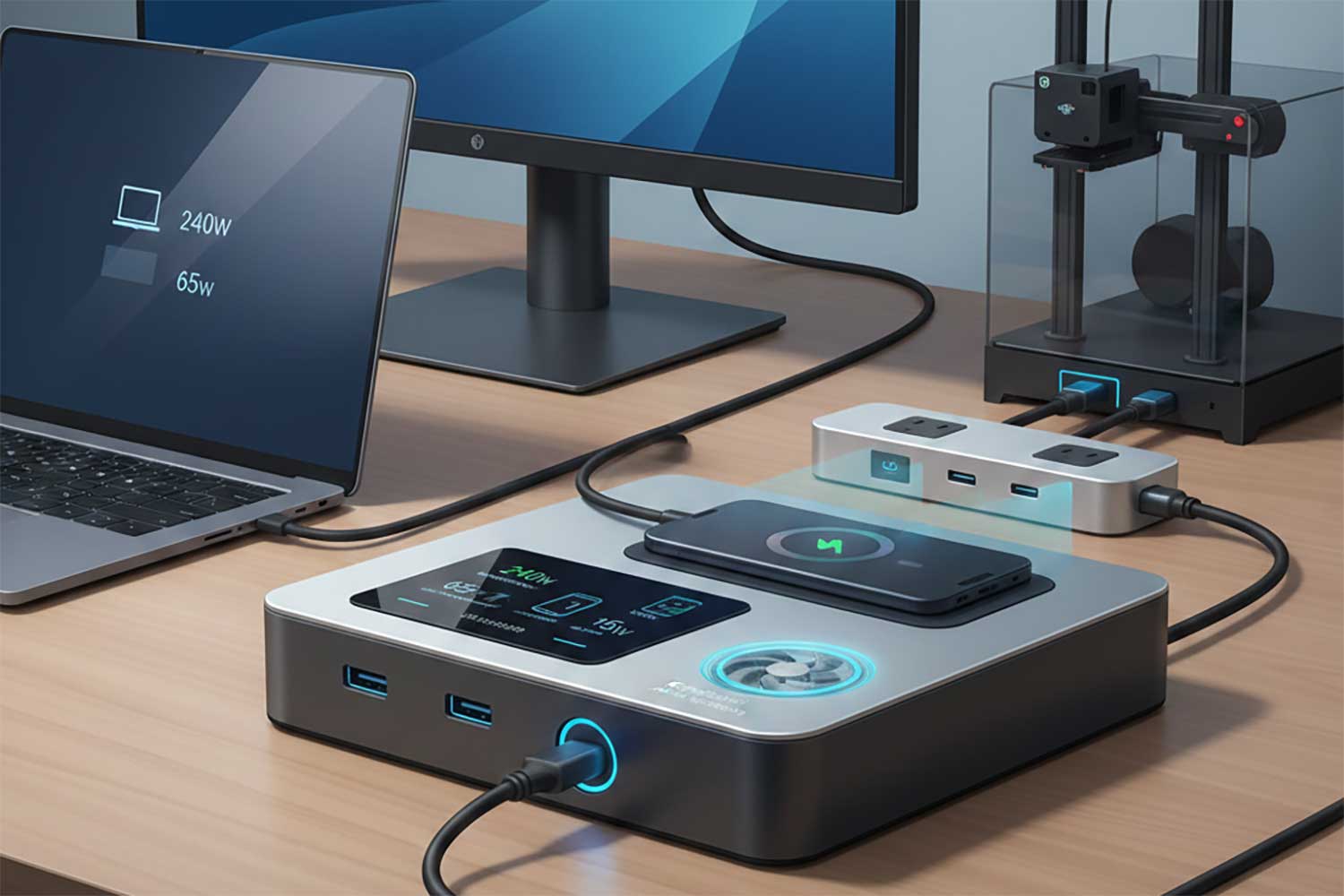
5. Multi-Device “Modular” Infrastructure: The market has shifted away from single-device pads toward modular hubs.
- Detachable Power: New systems shall feature “detachable spheres”—charging modules that can be pulled off a base station to act as portable magnetic power banks, then snapped back on to recharge.

Leave A Comment
You must be logged in to post a comment.