
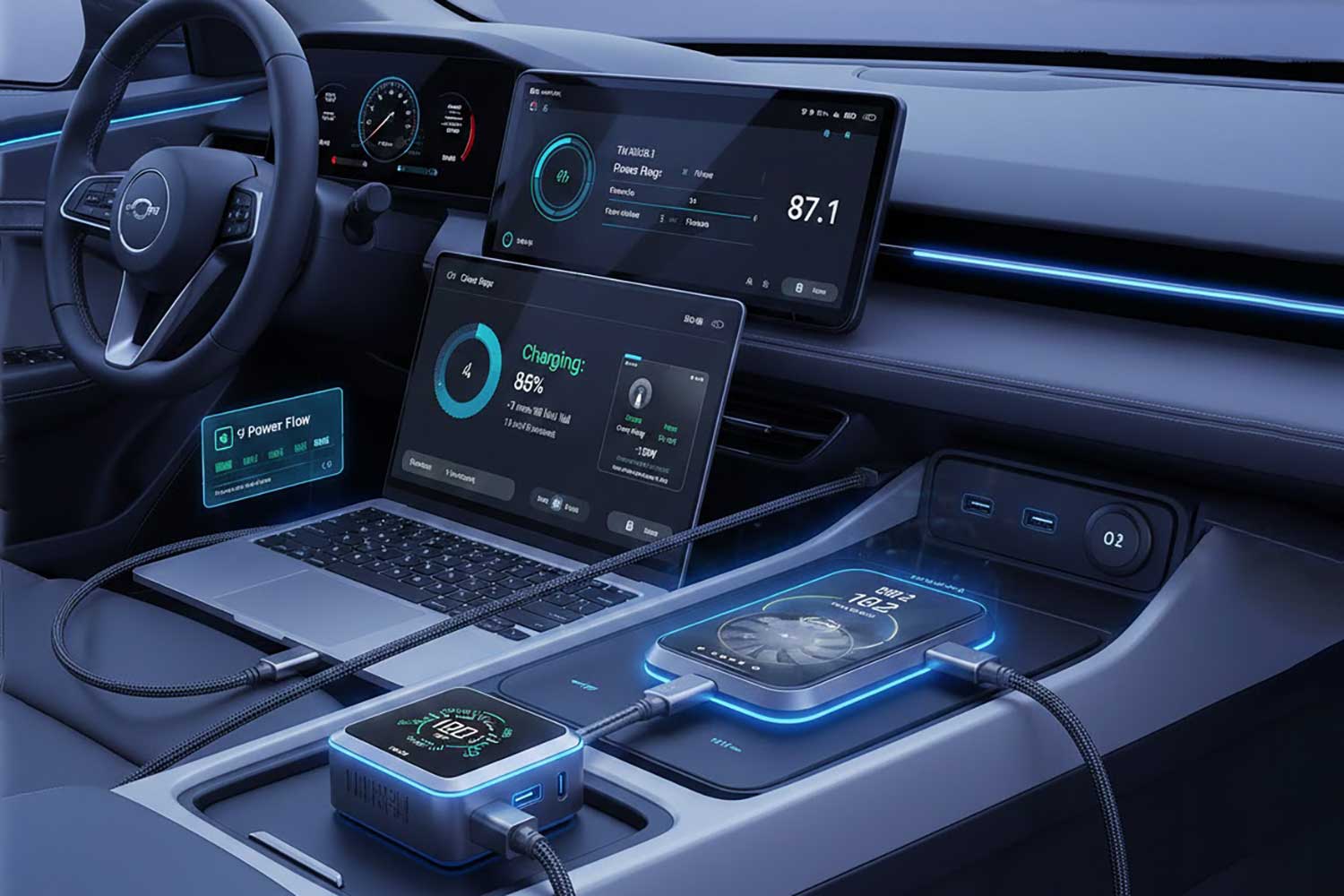
TThe car charger market in consumer electronics has moved far beyond the simple “cigarette lighter” plug. Driven by the electrification of vehicles and the increasing power demands of smartphones and laptops, several key trends are defining YERVIM’s future development landscape.
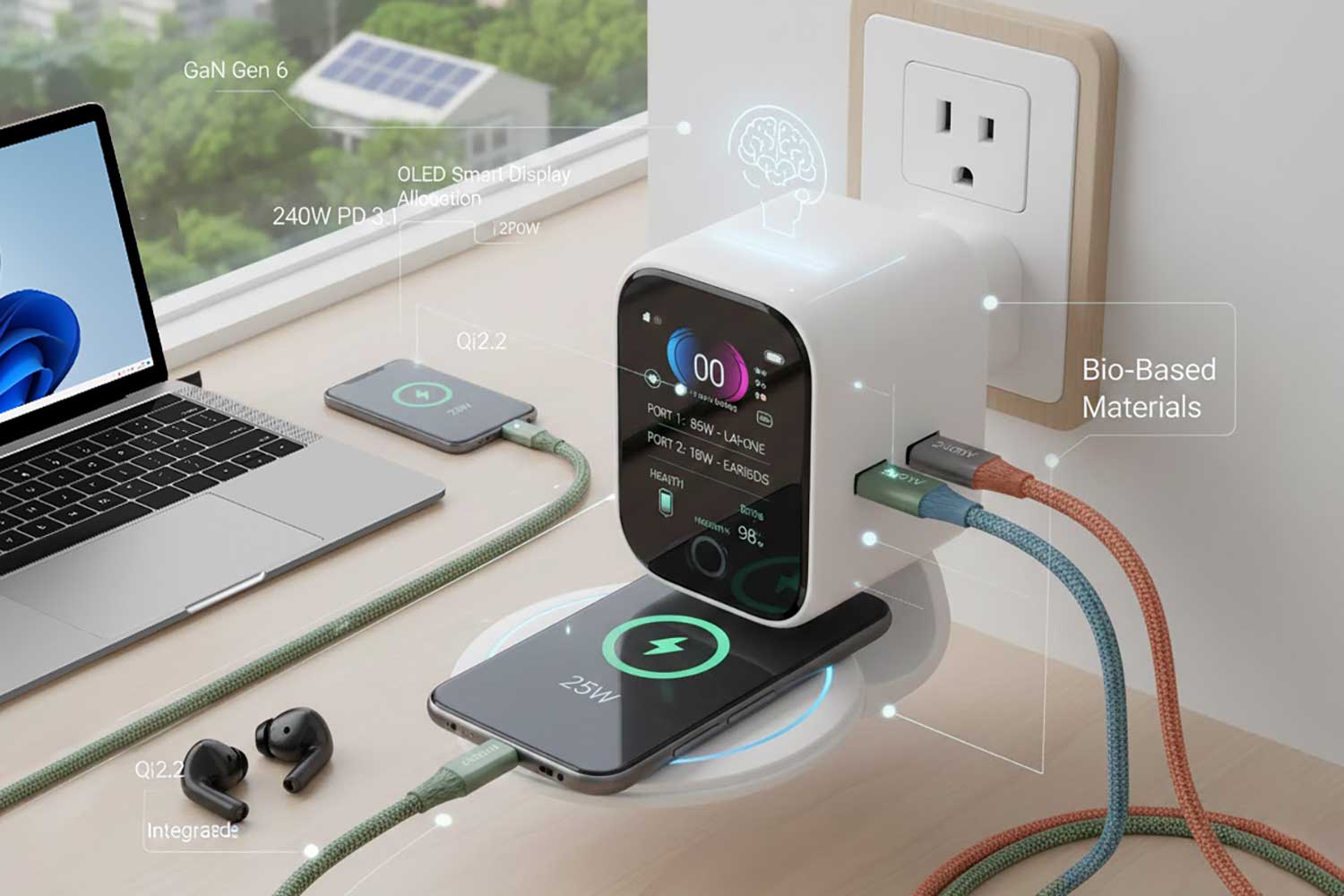
1. The Rise of GaN (Gallium Nitride) Technology: The most significant shift in hardware is the replacement of traditional silicon with GaN (Gallium Nitride) semiconductors.
- Extreme Compactness: GaN chargers are up to 50% smaller than silicon-based ones while delivering the same power.
- Higher Wattage: In-car chargers can now safely reach outputs of 65W to 100W, allowing users to charge high-performance laptops (like a MacBook Pro) directly from their car’s DC port.
- Thermal Efficiency: GaN produces significantly less heat, which is critical for the confined, high-temperature environment of a car interior.
2. Standardizing on USB-C and Power Delivery (PD) 3.1: The industry has almost entirely standardized on USB-C, with the USB PD 3.1 protocol becoming the new benchmark.
- Single-Cable Solution: Chargers now feature multiple USB-C ports that can intelligently “handshake” with devices to provide the exact voltage needed.
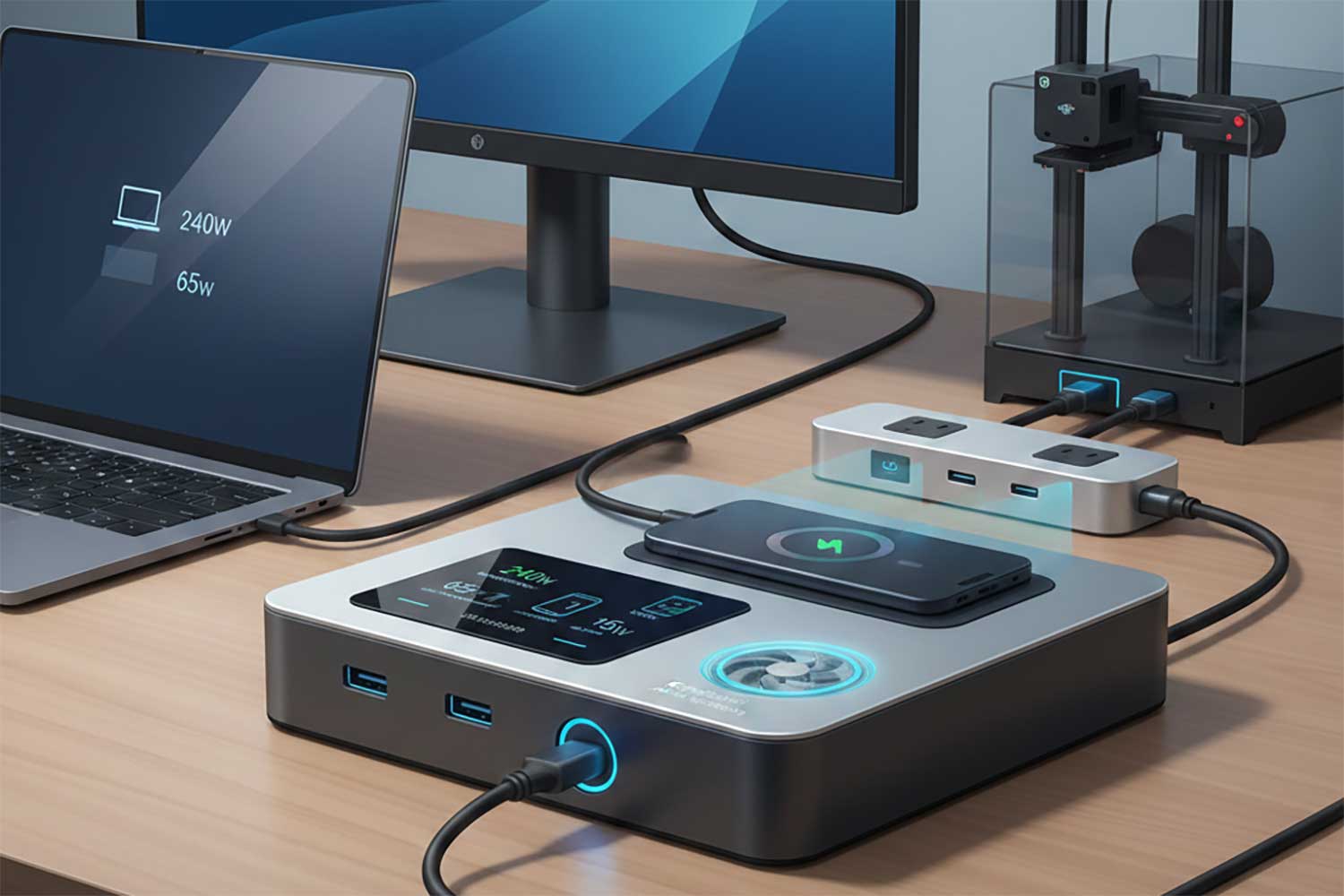
- Smart Power Allocation: Modern chargers use AI-driven controllers to dynamically distribute power. If you plug in a phone and a laptop, the charger will automatically shift more power to the laptop and “trickle charge” the phone to preserve battery health.
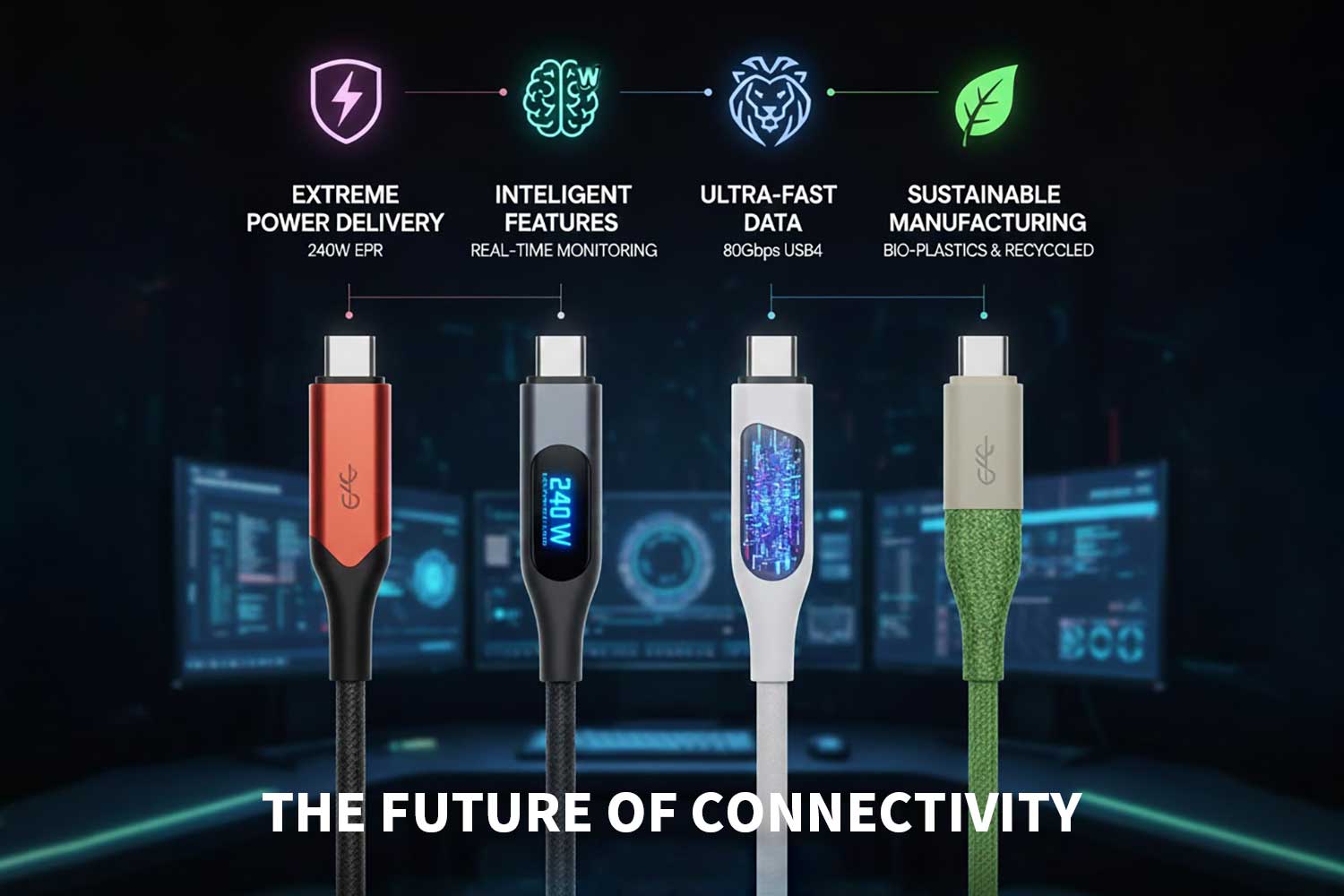
- 240W Potential: While 100W is the current consumer standard, the PD 3.1 spec allows for up to 240W, paving the way for gaming laptops and high-drain equipment to be powered in-car.
3. Advanced Magnetic & Integrated Wireless Charging: Wireless charging is evolving from a slow “top-up” feature to a primary charging method.
- MagSafe & Qi2 Standards: The adoption of the Qi2 standard (based on Apple’s MagSafe) ensures perfect magnetic alignment for Android and iOS alike. This prevents the “shifting” that often stops wireless charging during bumpy car rides.
- Higher Speeds: In-car wireless pads are moving from 5W/7.5W up to 15W and 25W, narrowing the speed gap between wired and wireless.
- Active Cooling: To combat the heat generated by fast wireless charging and sunlight through the windshield, premium chargers now include built-in silent fans and heat sinks.
4. Integration with the EV Ecosystem: As electric vehicles (EVs) become the norm, the “car charger” is no longer just a separate accessory; it’s an integrated component.
- Vehicle-to-Load (V2L): Many modern EVs now come with built-in AC outlets and high-power USB-C ports, reducing the need for aftermarket 12V plug-in adapters.
- On-Screen Monitoring: Some smart chargers now sync via Bluetooth to your smartphone or the car’s infotainment system to show real-time charging speeds, estimated time to full, and battery health analytics.
5. Sustainability and Material Innovation: YERVIM is increasingly focusing on the environmental impact of these accessories.
- Eco-Friendly Materials: We are seeing a surge in chargers made from PCR (Post-Consumer Recycled) plastics and biodegradable materials.
- Durability-First Design: To reduce e-waste, “ruggedized” chargers with braided Kevlar cables and reinforced metal alloy housings are becoming more common in the premium segment.
Comparison Table
| Feature | 2020 Standard | Future Direction |
|---|---|---|
| Material | Silicon | GaN (Gallium Nitride) |
| Max Power | 18~30W | 65~140W+ |
| Primary Port | USB-A | USB-C (PD 3.1) |
| Wireless | Standard Qi(Slow) | Qi2 / Magnetic (Fast) |
| Intelligency | Fixed Power | AI Dynamic Allocation |


Leave A Comment
You must be logged in to post a comment.